
Heritage turkeys are interesting turkey breeds that are characterized by their striking plumages and high-quality meat. They are lighter and leaner due to less muscle and are also known to fly, perch, and reproduce naturally. One cool-looking breed is the Slate turkey, which is a rare bird with dwindling populations.
Slate turkey is medium-sized heritage turkeys known for their blue plumage. Generally, they are raised for meat production and their carcass size, but they are also kept as pets and entered into poultry exhibitions.
Today they are no longer considered critically endangered. The Livestock Conservancy lists them as "Watch," an improvement from "Threatened" in 2023, helped by growing demand for pastured heritage turkeys.
This article will talk about the slate turkey, its history, physical attributes and size, distinctive characteristics, temperament, uses, and other interesting information. Make sure you read further for more!
Quick Answer: What Is a Slate (Blue Slate) Turkey?
- The Slate (or Blue Slate) is a heritage turkey named for its slate-blue plumage — genetically a dilution of the Black turkey, not a separate wild species.
- The color comes from a dominant dilution (D) gene on a black base, producing three expressions: ashy-blue with black flecks (classic Slate), solid self-blue (sometimes sold as "Lavender"), and solid black.
- APA-accepted in 1874; young toms average about 23 lb (10.5 kg) and young hens about 14 lb (6.3 kg), with mature toms up to roughly 33 lb.
- The Livestock Conservancy lists it as "Watch" — up from "Threatened" in 2023 — so it is still rare but recovering with demand for pastured turkeys.
- Kept mainly for meat and exhibition; hens are seasonal, non-prolific layers (~50 large cream-to-brown, spotted eggs a year) that go broody and hatch their own poults.
- As a true heritage breed it can fly, forage, and mate naturally — unlike broad-breasted commercial turkeys.
Slate Turkey at a Glance
| Trait | Detail |
|---|---|
| Also called | Blue Slate, Slate; self-blue form sometimes labeled Lavender |
| Type | Heritage turkey — naturally mating, can fly and forage |
| Plumage | Slate-blue (a dilution of black): ashy-blue with black flecks, solid self-blue, or solid black |
| Weight (young) | Tom ~23 lb (10.5 kg); hen ~14 lb (6.3 kg) |
| Weight (mature) | Tom up to ~33 lb (15 kg); hen up to ~18 lb (8 kg) |
| Eggs | ~50 large, cream-to-brown, spotted eggs per year; seasonal, non-prolific |
| Temperament | Placid and calm; toms can be territorial in breeding season |
| Primary use | Meat and exhibition |
| APA status | Accepted 1874 (Standard of Perfection) |
| Conservation status | Watch (Livestock Conservancy) — improved from Threatened in 2023 |
Slate Turkey History
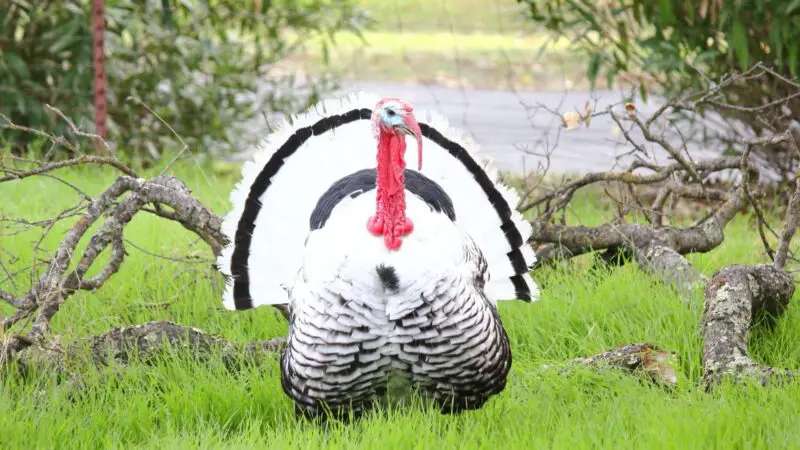
English colonists introduced European-bred strains of turkeys in the 17th century and started crossbreeding to achieve beautiful turkey plumage. All specific breeds of turkeys that were crossbred thereafter are referred to as heritage turkeys.
Slate turkeys are heritage turkeys that, like other breeds, originating from the North American wild turkey. Although the Slate turkey doesn’t have any exact origins, it is speculated that it was developed as either a cross-breed of a White turkey and a Black turkey or an Eastern Wild turkey and a Black Norfolk turkey. However, both have yet to be proven with genetic evidence.
The American Poultry Association officially recognized the Slate turkey as a breed in 1874. The Livestock Conservancy lists the Slate on its "Watch" list, an improvement from "Threatened" in 2023 as more keepers raise pastured heritage turkeys for the holiday market. However, they are quite popular in pastured poultry production.
Slate Turkey Identification
What Do Slate Turkeys Look Like?
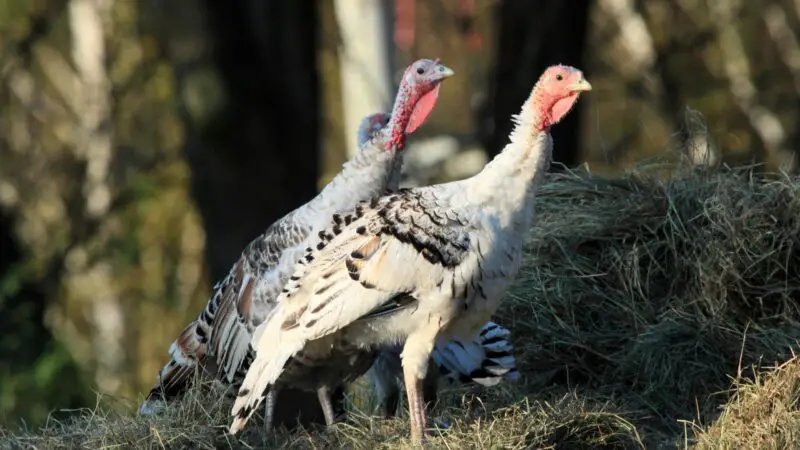
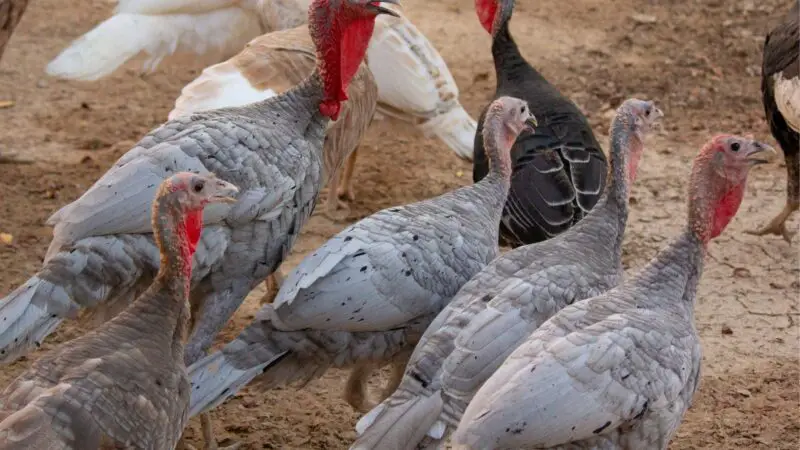
Slate turkeys are medium-sized turkeys that have three color morphs: solid black, solid blue-gray, and blue specks of black on their feathers. Females are generally paler in plumage as they can even be lavender-colored compared to males.
Both sexes are characterized by a red to bluish-white head, throat with brown eyes, horn-colored beaks, black beards, and pink toes and shanks.
How Long Does a Slate Turkey Live?
The lifespan of slate turkeys is 5 to 9 years, which is in between the lifespans of wild turkeys (3 to 5 years) and domesticated turkeys (up to 10 years).
How Big Do Slate Turkeys Grow?
Slate turkeys are a mid-sized heritage breed with well-documented show weights. Under the American Poultry Association Standard, a young tom weighs about 23 lb (10.5 kg) and a young hen about 14 lb (6.3 kg), while mature toms reach roughly 33 lb (15 kg) and mature hens about 18 lb (8 kg).
Are Slate Turkeys a Heavy Breed?
Slate turkeys are a relatively heavy breed, with young males, or jakes, reaching up to 10.5 kilograms in weight while young females, or jennies, weigh up to 6.3 kilograms. Mature slate turkeys reach up to 15 kilograms.
They are second to the bronze turkey, which is considered the heaviest turkey breed, with adults reaching up to 18 kilograms.
Slate Turkey Wingspan
Information regarding the Slate turkey’s wingspan is unknown. However, wild turkeys have wings that measure 1.2 to 1.4 meters, so it’s possible they’re around this range too.
What Is Slate Turkey Known For?
Although they have become rare in the poultry industry, slate turkeys are raised for their excellent meat flavor and good-sized carcass. Due to their striking plumage, they are also kept as pets, with owners allowing them to participate in poultry exhibitions.
They have spotted brown or cream-colored eggs. However, they are typically not raised for egg production.
Where Do Slate Turkeys Originate?
They originate from the North American wild turkey, but it is unknown what its parent breeds are and where they were bred. Generally, turkeys were first domesticated in Mexico.
What Are the Distinct Characteristics of a Slate Turkey?
Slate turkeys are generally easy to tame and can easily become gentle and docile. However, they can also be wary and aggressive towards others, depending on how breeders raise them.
Additionally, males are territorial, just like other fowl. They are diurnal and spend their time foraging in yards and other areas they are allotted to roam around.
What Do Slate Turkeys Eat?
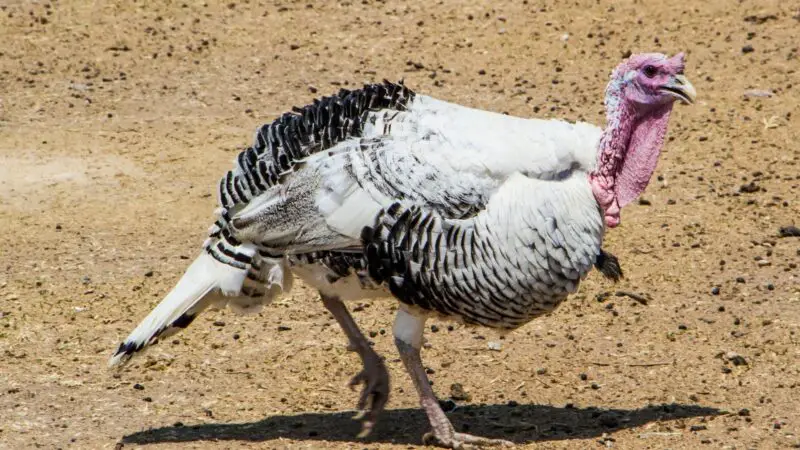
Like all turkeys, they forage insects and vegetation. Breeders will usually supplement them with turkey feed that they pre-mix themselves or purchased online or in local stores. They can also consume fruits and vegetables.
Slate Turkey Temperament
Slate turkey is easy to tame and usually docile, but males are known to resort to aggression. If breeders train them to be wary and aggressive over other individuals or even humans, they can easily adopt that temperament.
Are Slate Turkeys Friendly?
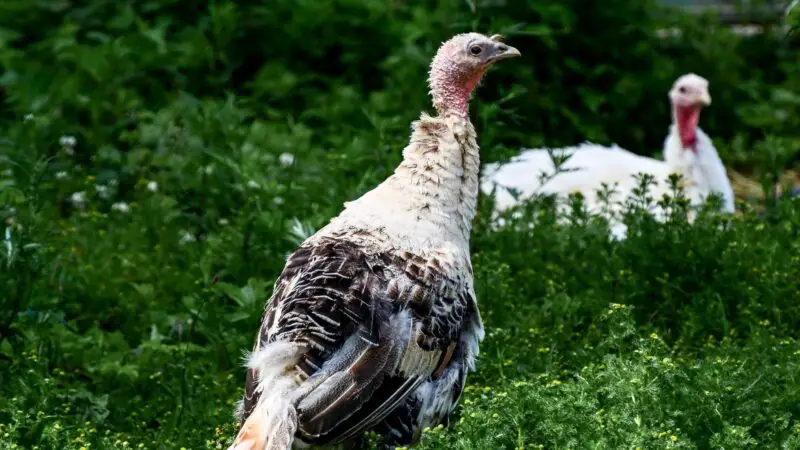
Slate turkeys are friendly enough to be kept as pets and domesticated in poultry farms. They can also get quite attached to their owners, immediately running over to them when they visit.
When in contact with other animals, such as roosters, they rarely show aggression unless they are toms or male adult turkeys who are highly territorial.
How to Tell Male From Female Slate Turkeys?
The first telltale characteristic is their color: females are lighter in plumage, acquiring a more lavender or light blue color compared to males.
Toms usually have larger overall sizes, snoods, and caruncles (the fleshy bump found on top of their necks), compared to females. Additionally, females do not grow a beard, and males tend to strut while walking.
Are Slate Turkeys Aggressive?
Generally, slate turkeys are not aggressive since they are tame and friendly towards both humans and other animals, but they can get aggressive if they were raised that way by their breeders or if they are toms as they are naturally territorial.
Are Slate Turkeys Good Egg Layers?
Hens can produce 40 to 50 eggs during their first two years, which is also its peak production period when they are incubated artificially. When they are naturally incubated, they lay about 20 to 25 eggs.
This is half of what an average turkey female breeder lays per cycle, which is 100 to 130 eggs. Hence, they are considered poor egg layers.
How Often Do Sebright Hens Lay Eggs?
Sebright chickens are considered poor egg layers, capable of laying only 50 to 80 small eggs a year. A good egg layer usually produces more than 280 eggs a year.
Are Slate Turkeys Broody?
Slate turkeys are broody. They are known to exhibit broody behavior, such as hissing, pecking, and raising their feathers, after producing a clutch of eggs and sitting on them for incubation. This is true for all turkeys, regardless of species and breed.
Are Slate Turkeys Loud?
Slate turkeys are loud. They constantly make gobbling sounds, especially in response to loud noises or sudden movements since they are vigilant animals.
Males are also loud during the spring, making rapid gurgling sounds to announce their presence to potential mates. Otherwise, they make huffing and puffing sound even while being silent.
How Much Is a Slate Turkey?
As of this writing, baby poults that are unsexed are being sold at $11.65 to $22 in commercial hatcheries. Prices would usually increase if the birds stay longer in the hatcheries before being bought to cover electricity and feed costs. Adults can cost from $25 to $30, but if the demand is high, they can reach up to $50.
Slate Turkeys Care Tips
- Poults must be brooded or placed in environments with sufficient insulation, ventilation, food, and water during the first weeks of their life. They grow faster when they are brooded within 48 hours after hatching. As such, they should be exposed to a properly managed heat source.
- Place a clean, absorbent, and dry bedding material on the brooding area. Make sure you clean the poults’ litter.
- If necessary, guide the poults into drinking water and eating, as they may find it difficult to find them. Once they have grown enough, provide your turkeys with a nutritionally balanced diet, preferably in the form of pellets to improve growth efficiency.
- Heritage turkeys are less susceptible to diseases compared to commercial strains, but it doesn’t mean they are immune to them. This is why good sanitation of their pens should be maintained.
- When one member of your flock of turkeys becomes sick, proper diagnosis and treatment should be done with your local veterinarian or animal experts.
- When raising turkeys on farms, proper handling of pesticides and other chemicals, as well as proper disposal of waste should be observed as they can infect the living area of the turkeys.
Related Questions
Are Blue Slate Turkeys Endangered?
According to the Livestock Conservancy, Blue Slate turkeys are listed as "Watch" — recovering from "Threatened" in 2023, but still an uncommon heritage breed. Heritage turkeys, in general, already comprise only a minority of the total population of turkeys, so this comes as no surprise.
What Egg Color Do Blue Slate Turkeys Lay?
Slate turkey eggs are cream or light brown in color and are adorned with small spots on the eggshell.
How Many Eggs Do Blue Slate Turkeys Lay?
A typical slate turkey hen can produce as many as 40 to 50 eggs when incubated artificially and 20 to 25 eggs when naturally incubated.
What Breed of Turkey Lays the Most Eggs?
Beltsville white turkeys and bourbon red turkeys are good egg layers capable of producing 150 to 180 eggs and 160 to 180 eggs a year, respectively. Although turkeys aren’t usually raised for egg production, these particular turkey breeds are known for their egg-laying capabilities.
Related Turkey Breed Guides
Choosing or identifying a turkey? Keep going with the rest of our turkey breed series:
- Turkey Breeds: Visual ID Guide
- Heritage Turkey Breeds
- Royal Palm Turkey
- Beltsville Small White Turkey