
For thousands of years, chickens have been domesticated. Today, there are now hundreds of breeds that exist. Some distinguishing physical traits among chickens include their size, features, plumage color, egg color, and more. Still, when it comes to what a chicken looks like, the basic features are the same.
What does a chicken look like? Chickens look like oversized, land-walking birds that come in a variety of colors and feather patterns. They have combs on their heads, long necks, and round bodies with small legs. Male chickens are more colorful than females with plumage that’s vibrant and extravagant.
This article will explain the many different shapes, sizes, and colors of chickens. Read on and learn.
Quick Answer: What Does a Chicken Look Like?
- A chicken is a round-bodied, medium-sized bird with a small head, a long neck, a short curved beak, a fleshy red comb on top, and dangling wattles under the chin.
- It stands on two scaly shanks (legs) ending in feet with four toes (three forward, one back); a few breeds have five.
- Plumage color and pattern vary widely by breed, and roosters are showier than hens — with long, pointed hackle (neck) and saddle (lower-back) feathers and arched sickle tail feathers that hens lack.
- Inside, a chicken has a food-storage crop, a two-part stomach (proventriculus + gizzard), and a single rear opening called the vent (cloaca) used for droppings, eggs, and mating.
Chicken Anatomy: Parts of a Chicken
| Body Part | What It Is & Does |
|---|---|
| Comb | The fleshy, usually bright-red crest on top of the head (single, rose, or pea types by breed). Helps shed heat and signals health and maturity; larger and brighter in roosters. |
| Wattles | A pair of red fleshy lobes hanging beneath the beak. Aid temperature control and act as a health/maturity signal; noticeably larger in roosters. |
| Beak | Hard, curved mouthpart used to peck, pick up, and break apart food, plus preening and defense. Chickens have no teeth, so the beak starts the eating process. |
| Eyes, ears & earlobes | Eyes sit on the sides of the head for a wide field of view. Ears are feather-covered openings with no outer flap. In common laying breeds, white earlobes usually go with white eggs and red lobes with brown eggs (exceptions exist, e.g. Araucana). |
| Hackle & saddle feathers | Hackles are the neck feathers; saddle feathers cover the lower back in front of the tail. In roosters both are long and pointed; in hens they are short and rounded — an easy way to tell the sexes apart. |
| Sickle (tail) feathers | Long, arched, often iridescent tail feathers found on roosters. Hens lack true sickles and have shorter, straighter tail feathers. |
| Wings | Two wings bearing stiff flight feathers. Chickens can flap and make short, low bursts of flight but are poor sustained fliers. |
| Breast | The front of the body, padded by the large pectoral muscles (the white meat). The crop sits low at its base. |
| Shanks & scales | The lower legs below the hock joint, sheathed in tough, overlapping scales. Color varies by breed (yellow, slate, white). |
| Spurs | Pointed, keratin-covered bony projections on the inner shank, mainly on roosters. Used for defense and dominance; they begin growing around 3–4 months. |
| Toes & feet | Most chickens have four toes per foot — three forward, one back — tipped with claws for scratching. A few breeds (Dorking, Faverolles, Houdan, Sultan, Silkie) carry a fifth toe. |
| Crop | A stretchy storage pouch at the base of the neck where swallowed food is held before digestion, letting a bird grab food fast and process it later. |
| Gizzard & proventriculus (the ‘two stomachs’) | The proventriculus (glandular) adds acid and enzymes, then the muscular gizzard grinds food using swallowed grit — doing the job teeth would. |
| Vent (cloaca) | A single rear opening used for droppings, laying eggs, and mating; in hens the egg passes out through the vent. |
How to Tell if a Chick Is Male or Female?
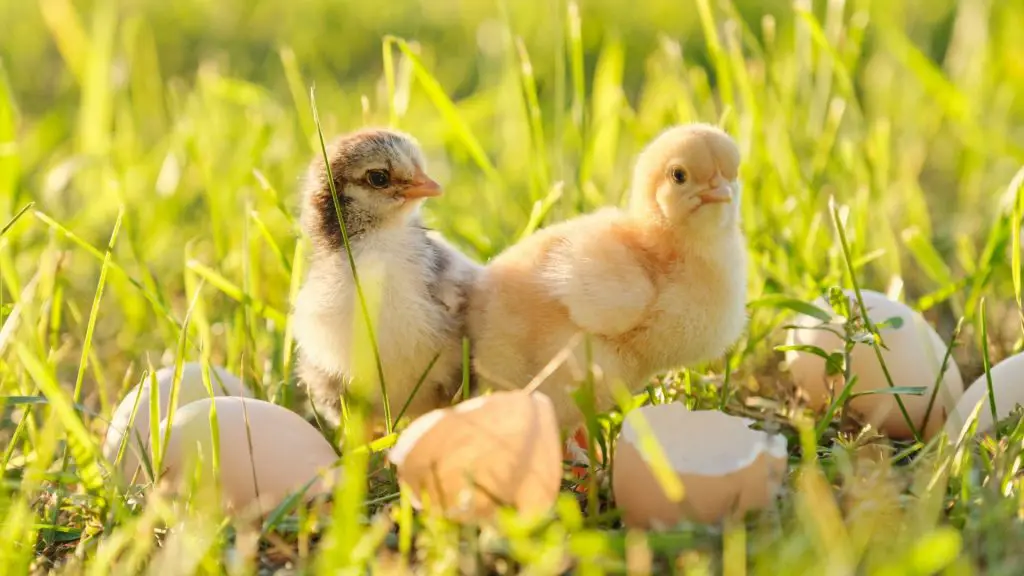
To tell if a chick is male or female, try color sexing, feather sexing, or cloacal sexing. Chicks are hard to sex before the age of six weeks, and each of these methods can yield incorrect results. So, it’s best to work with an experienced sexer who knows what to look for and can verify your data.
Related: Is a Rooster a Chicken? | Information and Facts
Color Sexing
Many varieties of chickens have different colors for males and females. As the chicks get older, you’ll be able to tell their sex by looking at them.
Each breed has different color sexing; looking at breed-specific websites and forums for pictures of different chicks can help with identification. Sometimes, males and females will develop unique color patterns, and it will be obvious.
Color sexing is not the most reliable method since natural variations in color could get mistaken for different sex colors. Cloacal sexing and feather sexing are the two most consistent methods.
Feather Sexing
Feather sexing is when you take the wing feathers of the chicks and examine them to determine the sex of the chicken. Male and female chickens have different feather growth.
It’s important to be gentle when conducting feather sexing. To see what the feathers of a chick look like, the wings must be moved around. If the chicks get agitated and held unpleasantly, they could hurt themselves easily in an attempt to get free.
Cloacal Sexing
Cloacal sexing is looking at the anatomy of the chick and examining the chick’s vent to see if it is prominent or not. Males have more prominent vent than females. However, not all males have a prominent vent.
Cloacal sexing should only be performed under the guidance of an experienced sexer. There are unique occurrences that do not fit neatly into ‘this or that’ sexing. An experienced sexer will catch these and identify your birds correctly.
How Tall Is a Chicken?
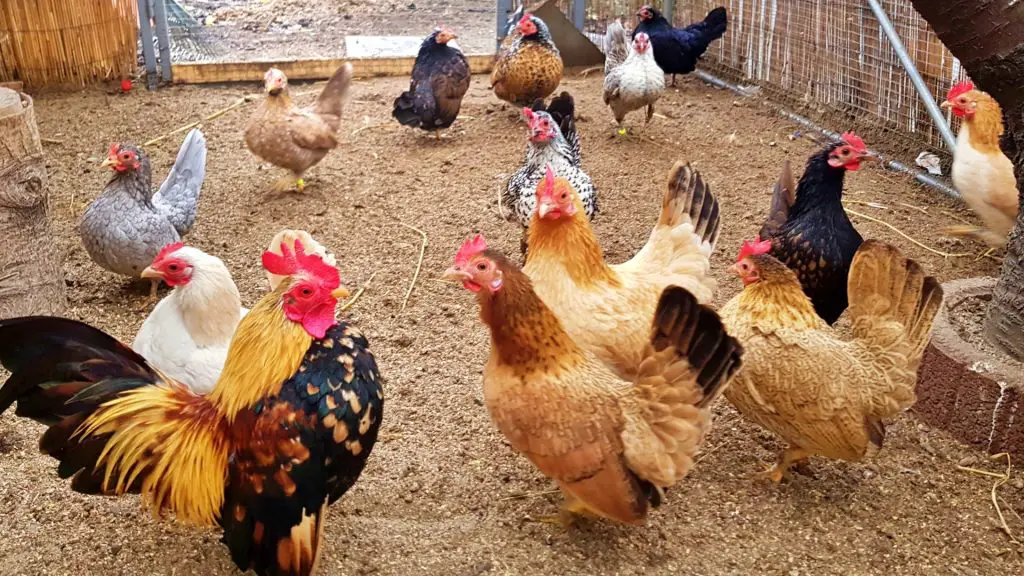
On average, a chicken is under 70 cm (27.5 in) tall. Malaysian Serama is the smallest chicken breed, ranging between 15 and 25 cm (5.9 and 9.8 in) tall and weighing less than 500 grams (1.1 lb). The tallest chicken is the Malay chicken which stands about 90 cm (35.4 in) tall.
Malays were primarily used as game hunting chickens. Nowadays, they are mainly used in showing. They are also a rare breed with very few individuals across the world.
Most miniature chickens are members of the Bantam family, birds that are a smaller version of a larger species. It’s the same idea as toy dog breeds compared to standard breeds, like the toy poodle and the standard poodle.
How Much Does a Chicken Weigh?
Chickens typically weigh around 2.5 kilograms (5.7 pounds). Bantam chickens can weigh as little as 500 grams (1.1 lb), while the Jersey Giant chickens can weigh up to 4.5-5.8 kg (10-13 lbs). The weight of a chicken is also affected by whether the birds are raised for the meat industry.
How Many Toes Does a Chicken Have?
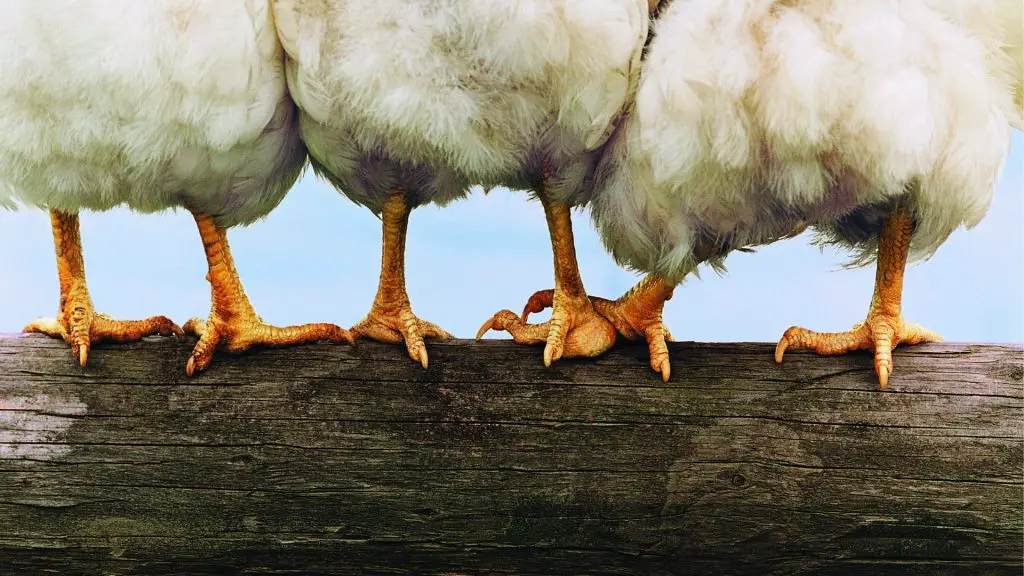
Most chickens should have four separate toes, but some varieties have five toes. This is because of a genetic mutation that has been nurtured and kept in the breed standard. Dorking, Faverolles, Houdan, Sultan, and Non-bearded Silkie Bantams are the five-toed chicken varieties.
What Is a Chicken Crop?
A crop is a part of the chicken’s digestive system, located in the breast. It holds excess food, which is later transported down into the digestive system and used. This is a valuable survival mechanism when chickens are struggling to find food sources, as this guarantees they won’t get starved in the meantime.
Where Is the Gizzard on a Chicken?
The gizzard on a chicken is located in the central digestive tract. This is where food gets ground up before continuing along the digestive process. The gizzard needs to be supplemented with additional grit for proper function.
In keeping chickens, it’s important to give them feed additives that have grit and other materials that they can use for the grinding process. Chickens need to get additional grit to help digestion; it’s healthy for them.
How Big Is a Chicken Brain?
A chicken brain is about the size of a couple of peanuts or a human eyeball. It is much smaller in comparison to the body that it controls. Researchers at Linköping University have determined that domestication has caused the chicken’s brain to shrink relative to their jungle fowl ancestors.
What Is a Chicken Comb?
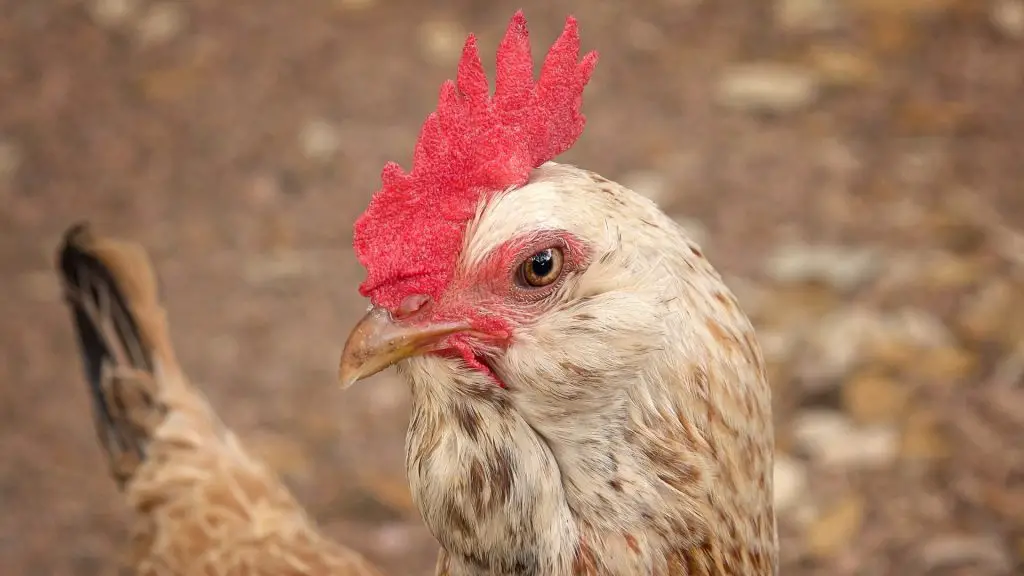
A chicken comb is a fleshy feature on the top of a chicken’s head that assists in temperature control. It’s a key part of selecting mates and serves as a visual signifier of health. This external feature also helps determine if a chicken is male or female.
A bird’s comb will also show how they are feeling. If the wattle is pale or a darker red than usual, this can typically mean the chicken has circulation issues. Whereas, if the wattle is floppier than usual, that can be a sign of dehydration and poor circulation.
What Is a Chicken Vent?
The chicken vent is a dual-use spot where fecal matter is released and where sexual reproduction occurs. In female chickens, this is also where the egg is also passed. The vent is a crucial area for the health of your birds.
What Is a Wattle on a Chicken?
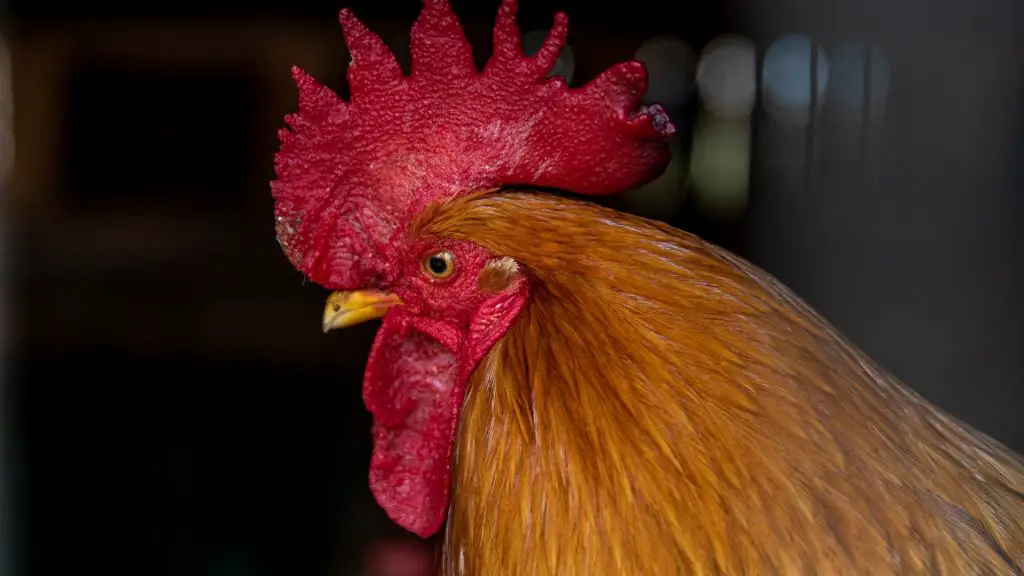
The wattle is an external fleshy feature on the bottom of a chicken’s head. With the comb, the wattle is used to determine a bird’s health at any given time and help with temperature control. Wattles are larger in roosters, who use them as sexual signification when courting the love of female hens.
How Many Bones Does a Chicken Have?
Chickens have 120 bones, with 39 of those in the spine. They have two types of bones:
- Hollow bones: Connected to the respiratory system called pneumatic bones.
- Medullary bones: Contain bone marrow and are not hollow.
How Many Stomachs Does a Chicken Have?
A chicken has two stomachs that work to pass food back and forth between each other and grind them down to make the food usable as nutrients. This is a long process depending on how dense the food is.
Do Chicken Eggs Have Umbilical Cords?
Chicken eggs don’t have umbilical cords the way mammals do. There is a cord that connects the fetus to the egg yolk to get nutrients, but it’s not the same as an umbilical cord. This cord makes sure the fetal chicken gets all the nutrients it needs to survive and grow.
The yolk is absorbed after hatching and gives your chicks the best start. There’s no need to feed chicks right after they hatch because they have the nutrients they need.
Related Chicken Guides
New to keeping chickens? Here are more chicken basics worth knowing:
- What Kind of Chicken Do I Have?
- How Long Until a Chicken Is Full Grown?
- Where Do Chickens Live in the Wild?
- Do Chickens Have Tails?
- Is a Rooster a Chicken?
- Do We Eat Male Chickens?