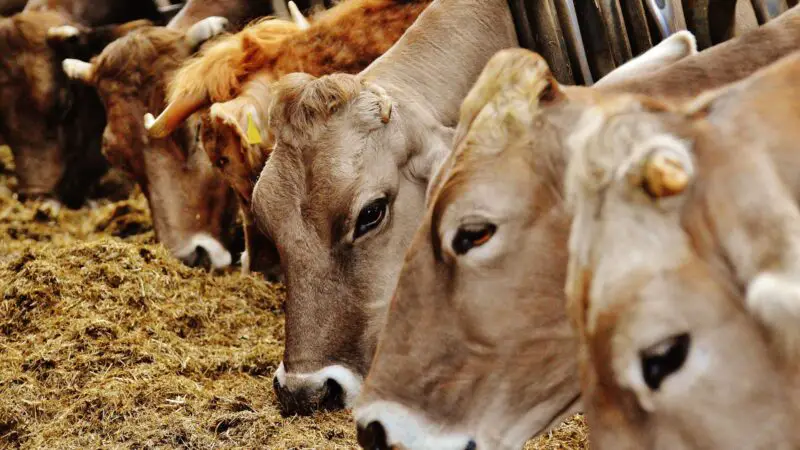
Cows are ruminants built to live on forage, so a healthy diet is mostly grass and hay, topped up with grain, protein and minerals only as the animal’s age, weight and purpose require. Get the balance right and you get healthier cattle, better milk and steadier weight gain; get it wrong — too much grain too fast, moldy feed or the wrong pasture — and you risk bloat, acidosis or worse.
By delving deeper into this guide, you’ll learn more about cows’ dietary needs, the best food options, and essential supplements. We’ll cover daily health care, nutritional recommendations, common health challenges, and social aspects of raising cows.
Quick Answer: What to Feed a Cow
- Forage is the base. Grass pasture and good hay should make up most of the diet — a cow eats roughly 2–2.5% of its body weight in dry matter per day (about 24–30 lb of hay for a 1,000–1,200 lb cow).
- Add energy and protein as needed. Grains like corn, barley or oats supply energy, and protein supplements such as soybean or canola meal fill gaps when forage is poor — introduce grain gradually to avoid acidosis.
- Always provide clean water and free-choice minerals. A lactating cow can drink 20–40+ gallons a day; a salt/mineral mix covers calcium, phosphorus and trace elements.
- Match the ration to the cow. Dairy, beef, growing and pregnant cattle have different needs — adjust energy and protein by age, weight and purpose.
- Avoid the danger feeds: moldy feed, sudden grain loads, lush legume pasture (bloat risk), and toxic items like avocado, onions and chocolate.
What Do Cows Need?
Cows require a balanced diet of energy, protein, vitamins, and minerals to thrive. They need access to clean water, comfortable living conditions, and proper veterinary care. Additionally, cows are social animals, so they benefit from being around other cows and having plenty of space to roam and graze.
Daily Health Care for Cows
Daily health care for cows includes monitoring their diet, maintaining a clean environment, and checking for signs of illness or injury. Regular veterinary visits are essential to ensure your cows receive proper vaccinations and timely treatment if needed. Observing your cows’ behavior and body condition can help you identify potential health issues before they become severe.
Food and Nutritional Recommendations for Cows
What is the best diet for cattle?
The ideal diet for cattle depends on their age, breed, and purpose (dairy or beef). Generally, a combination of forages, grains, and supplements will provide a balanced diet.
What are the most important nutrients to feed beef cattle?
The most critical nutrients for beef cattle are energy, protein, vitamins, and minerals. A combination of forages, grains, and supplements will ensure their nutritional needs are met.
What protein do cows need?
Cows require proteins to support growth, reproduction, and milk production. High-quality forages and protein supplements, such as soybean meal or canola meal, can provide the necessary proteins.
What grain is best for beef cattle?
Corn is a popular grain for beef cattle due to its high energy content. However, barley, oats, and wheat can also be suitable options, depending on availability and cost.
What Grass Can Cows Eat?
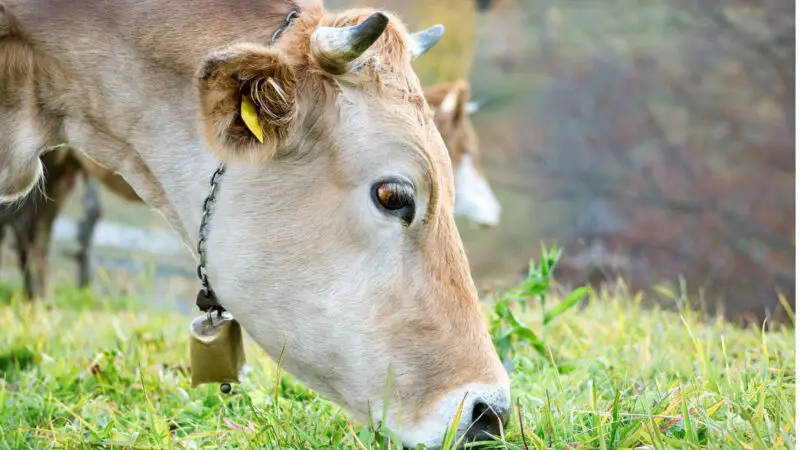
Cows can graze on a variety of grasses, including ryegrass, bermudagrass, orchardgrass, bluegrass, and timothy. A diverse pasture mix provides an array of nutrients and keeps the pasture healthier than a single species.
One important caution about tall fescue. Tall fescue is one of the most widely grazed pasture grasses in the United States, but the common Kentucky-31 type is usually infected with a fungal endophyte that produces ergot alkaloids. Cattle grazing endophyte-infected fescue can develop fescue toxicosis — reduced feed intake and weight gain, heat stress and a rough, unshed coat in summer, poor reproduction, and in cold weather “fescue foot” (lameness from restricted blood flow). If your pasture is fescue, ask your seed supplier or extension office about novel (“friendly”) endophyte or endophyte-free varieties, dilute it with legumes, and avoid grazing heavily during the hot, seed-head stage.
What Fruits and Vegetables Can Cows Eat?
Cows can eat various fruits and vegetables, such as apples, pears, pumpkins, and carrots. However, these should be fed in moderation as treats and not as a primary food source.
Related: Can Cows Eat Bananas and Apples? List of Fruits Cows Can Eat and Should Not Eat
What Human Food Can Cows Eat?
Cows can consume some human foods like bread, cereals, and fruit and vegetable scraps. These should be fed sparingly and never replace a well-balanced diet.
Do cows need a pasture?
Yes, cows need a pasture for grazing, exercise, and socialization. Providing a pasture can improve their overall health and well-being.
Social Recommendations for Cows
Cows are herd animals and benefit from living with other cows. A group setting can improve their overall happiness, reduce stress, and contribute to better health.
Common Cow Health Challenges
Common health challenges for cows include mastitis, lameness, respiratory infections, and gastrointestinal issues. Regular health care and a balanced diet can help prevent these issues.
What Should You Not Feed Cows?
Avoid feeding cows chocolate, onions, raw potatoes, avocado, moldy or spoiled feed, and sudden large amounts of grain. Moldy feed can carry mycotoxins, and a sudden grain load can trigger ruminal acidosis (grain overload) — always increase grain slowly over 1–2 weeks. Also keep cattle away from common toxic plants such as wilted cherry and other prunus leaves, hemlock, nightshade, and bracken fern, and never feed other animals’ medicated feeds without checking they are safe for cattle.
Related questions
Is soybean meal good for cattle?
Yes, soybean meal is an excellent protein source for cattle. It’s highly digestible and provides essential amino acids.
Can you feed cattle too much protein?
Yes, excessive protein can lead to health issues, such as ammonia toxicity, and negatively impact the environment due to increased nitrogen excretion. Balance protein intake with energy sources in their diet.
What is the cheapest way to feed cattle?
Feeding cattle on pasture or using locally available forage and grains can be the most cost-effective approach. Remember, though, a well-balanced diet is crucial for their health and productivity.
Can cows eat too much alfalfa?
Yes — lush legume forage such as alfalfa (and clover) can cause frothy bloat, a potentially fatal build-up of gas in the rumen. Introduce cattle to rich legume pasture gradually, never turn hungry cows onto it, keep dry hay available, and balance legumes with grass. (See our guide on whether cows can eat clover for more on managing this.)
Will cows stop eating when they are full?
Cows may not stop eating when full, especially if high-quality feed is available. Monitor their intake and adjust their diet accordingly to prevent overeating.
How much grain should a cow eat per day?
The amount of grain a cow should eat per day depends on factors like age, weight, and purpose. Consult a veterinarian or nutritionist for specific recommendations tailored to your cows.
How many times a day should you feed cows?
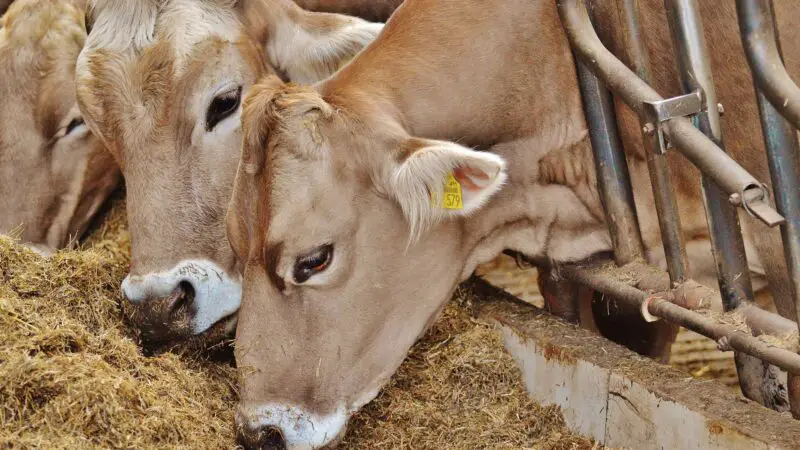
Cows should ideally be fed multiple times a day to ensure a consistent intake of nutrients. This can range from 2-4 times daily, depending on your management system and the cows’ needs.
How many bales of hay does a cow need a day?
A cow typically consumes 2-3% of its body weight in dry matter per day. For a 1,200-pound cow, this equates to 24-36 pounds of hay. The exact amount may vary depending on the quality and type of hay.
Final Thoughts
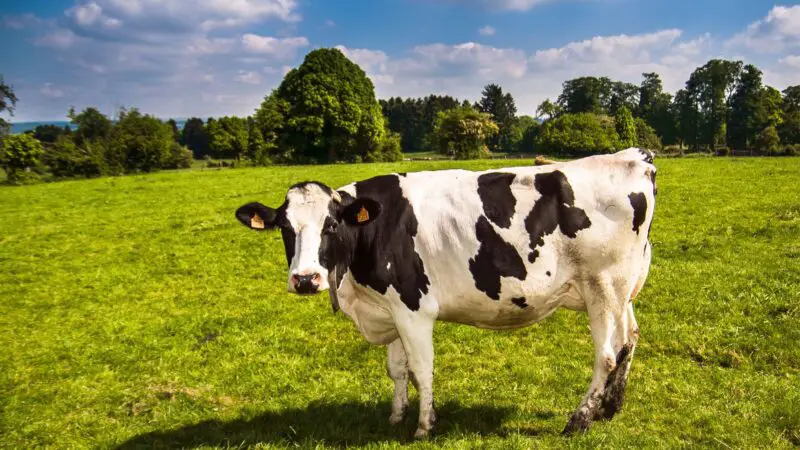
Providing a proper diet, food, and supplements for your cows is crucial for their health and productivity. By understanding their nutritional needs, monitoring their daily health care, and offering a well-balanced diet, you’ll be well on your way to raising happy, healthy cows.
Related Cow Care Guides
Raising cattle? Keep going with the rest of our cow series:
- Can Cows Eat Clover? (Bloat & Safety)
- Black and White Cow Breeds
- How Much Does a Cow Weigh?
- Cattle Guards Explained
- Do Cows Have Fur or Hair?
- Can Cows Swim?