
As an avid bird enthusiast, I’ve had my fair share of experiences with these mesmerizing creatures. Today, let’s explore the world of peacocks, their stunning feathers, and the process of shedding.
Peacocks typically shed their feathers annually, usually during the late summer or early autumn months, following the breeding season. This process, known as molting, allows them to replace old, worn-out feathers with new, vibrant ones.
By reading further, you’ll discover the wonders of peacock feathers, the science behind their stunning colors, and even tips on how to encourage these magnificent birds to display their plumage.
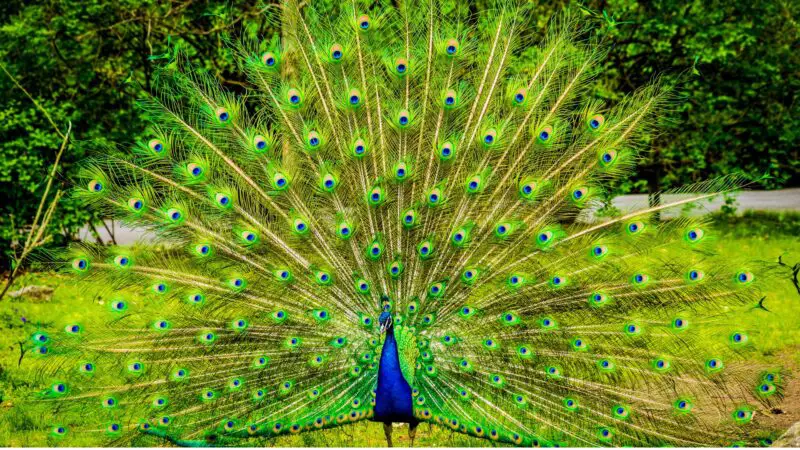
Quick Answer: When Do Peacocks Shed Their Feathers?
- Peacocks shed (molt) their train once a year in late summer — typically late July into August (N. Hemisphere) — right after the breeding season ends.
- The whole train can drop within just a few days; a male loses roughly 150-200 train feathers, including the eye-spotted coverts.
- A new, longer train regrows through fall and winter, reaching full length by early spring in time for the next breeding season.
- The train grows longer and more ornate each year until it is fully developed at about 5-6 years old.
- Fanning and rattling the train is a courtship display — a behavior, and a separate thing from the annual molt when feathers actually fall out.
Peacock Molt Cycle Through the Year
| Time of Year | What Happens to the Train |
|---|---|
| Spring / summer (breeding) | Full train is on display; the male fans and rattles it to court peahens – this is behavior, not shedding |
| Late summer (~July-August) | Post-breeding molt: the male sheds his entire train, often losing all of it within a few days |
| Fall / winter | A new, longer train regrows steadily and is largely regrown by late winter |
| Next spring | Fresh, full-length train is complete and ready for the next breeding season |
| Each year to ~5-6 yrs | The regrown train gets a little longer and more elaborate annually until fully developed around age 5-6 |
What Is Special About Peacock Feathers?
Peacock feathers are nothing short of spectacular. With their iridescent colors and mesmerizing patterns, these feathers serve as a visual display used to attract mates. Additionally, they possess unique microstructures that create their vibrant colors through a phenomenon called structural coloration.
What Is It Called When Peacocks Spread Their Feathers?
When a peacock fans out its stunning feathers, it’s called “displaying” or “dancing.” This behavior is part of their courtship ritual to impress and attract a peahen. The display showcases the male’s health and genetic quality, making it an essential aspect of peacock mating.
What Is So Interesting About the Peacock’s Tail?
The peacock’s tail, or train, is a breathtaking sight. Comprising up to 200 elongated feathers, the train is a canvas of vibrant colors and intricate patterns called “eyespots.” These spots, known as ocelli, help the peacock capture a peahen’s attention and signal a high-quality mate.
Do Peacocks Shed Their Tail Feathers?
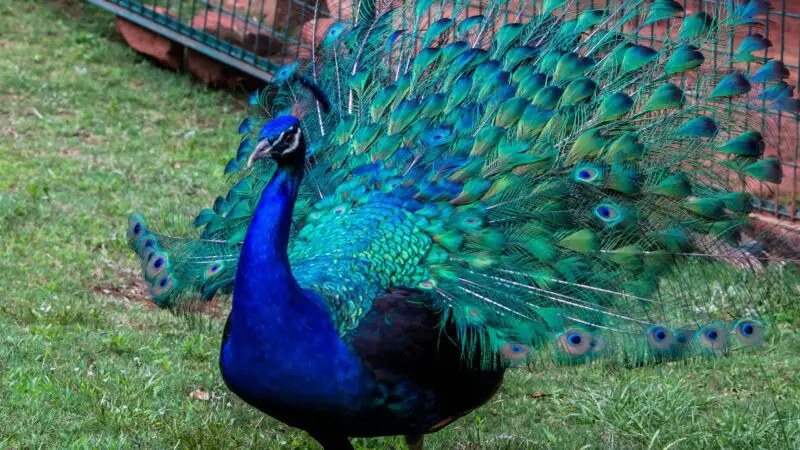
Yes, peacocks do shed their tail feathers. This process occurs during molting, which happens annually after the breeding season. Molting allows peacocks to replace damaged or worn-out feathers with new ones, ensuring a vibrant and healthy display in the next mating season.
How Often Does a Peacock Lose Its Feathers?
Peacocks lose their feathers once a year during the molting season. This typically happens in the late summer or early autumn, after the breeding season has concluded.
How Many Feathers Does a Peacock Shed?
A peacock can shed approximately 150-200 feathers during molting, including the tail feathers that make up their stunning train.
Why Do Peacocks Shed?
Peacocks shed their feathers to replace old, damaged, or worn-out ones. This process, called molting, helps maintain the health and functionality of their plumage, ensuring a vibrant display for attracting mates.
How Can You Tell the Age of a Peacock?
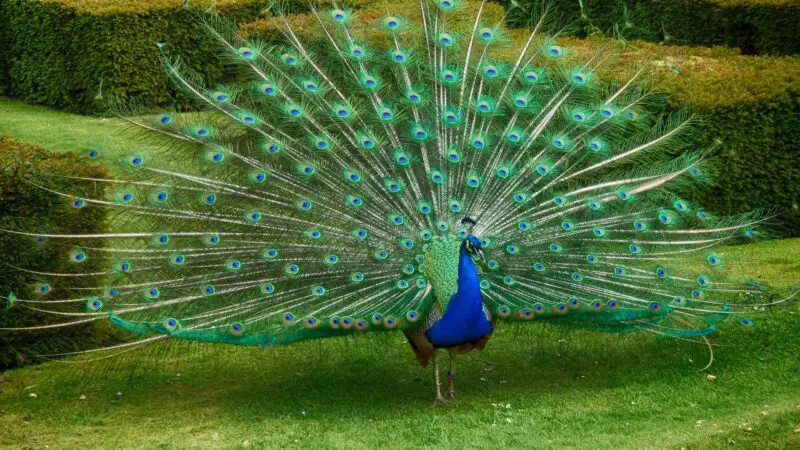
Estimating the age of a peacock can be challenging, but a few indicators can help. One way is to observe the length and quality of their tail feathers; young peacocks have shorter trains that grow longer and more vibrant with age. Another method is to check for the presence of spurs on their legs – these grow larger and more pronounced as the bird matures.
How Do Peacocks Get Their Color?
Peacock feathers get their vivid colors from a combination of pigments and microscopic structures called photonic crystals. These structures manipulate light, resulting in the iridescent hues we see in their plumage. This phenomenon, known as structural coloration, creates the fascinating visual effects unique to peacock feathers.
How Do You Get a Peacock to Open Its Feathers?
Encouraging a peacock to display its feathers can be tricky, as it’s primarily a courtship behavior. You can try mimicking the sounds and movements of a peahen, or use a mirror to make the peacock think there’s a potential mate nearby. Keep in mind, however, that these methods aren’t guaranteed to work, as the peacock’s display is a natural behavior driven by instinct.
How Do Peacocks Spread Their Feathers?
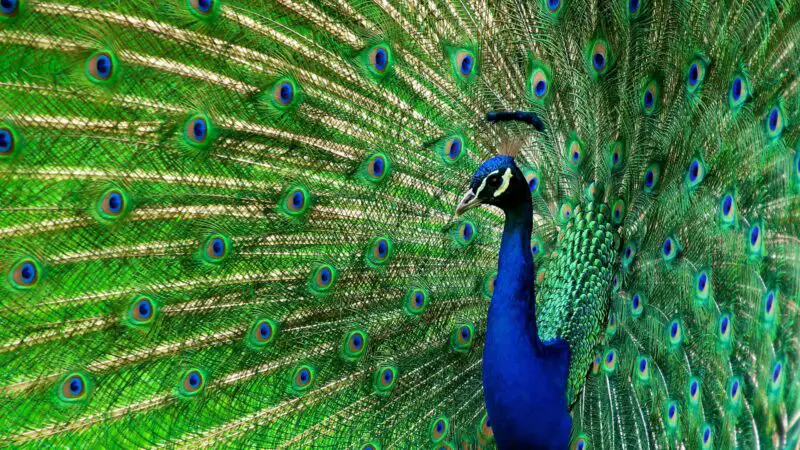
Peacocks spread their feathers by erecting and fanning out their train, creating an impressive semi-circle. They also vibrate their tail feathers, producing a rustling sound that further attracts the attention of peahens. This entire process is an intricate dance aimed at showcasing the peacock’s genetic fitness to potential mates.
Related Questions
How Much Can You Sell Peacock Feathers For?
The price of peacock feathers varies based on factors like size, quality, and color. On average, they can sell for anywhere from $1 to $5 per feather, with some specialty feathers fetching higher prices.
Related: How Much Does a Peacock Cost? | Are They Expensive?
When Does the Mating Season Begin for Peacocks?
The mating season for peacocks typically begins in early spring and lasts into midsummer, winding down before the late-summer molt begins. During this time, peacocks engage in courtship displays and behaviors to attract peahens.
Why Do People Think Peacocks Are Unlucky?
Peacocks have long been associated with various superstitions, with some cultures believing they bring bad luck. This belief may stem from the “evil eye” symbolism of the ocelli, or the peacock’s association with certain deities or mythological figures.
How Long Do Peacock Feathers Last?
Peacock feathers can last for several years if properly cared for. To preserve their vibrant colors and structural integrity, keep them away from direct sunlight and humidity, which can cause fading and damage.
Final Thoughts
Peacocks are fascinating creatures with a stunning display of feathers that never ceases to amaze. As we’ve explored, their annual molting process plays a crucial role in maintaining their vibrant plumage and ensuring they’re ready to impress during the mating season. By understanding the science and behavior behind these magnificent birds, we can appreciate their beauty and uniqueness even more.
More Peafowl Care & Keeping Guides
Thinking about keeping peafowl? These guides cover cost, feeding, eggs, and more:
- Peafowl Breeds & Color Varieties
- How Much Does a Peacock Cost?
- Feeding Baby Peacocks (Peachicks)
- Do Peacocks Make Good Pets?
- When Do Peacocks Lay Eggs?
- Keeping Peacock Feathers at Home